Starting Low Country Non-Fiction Writers

Since moving to Bluffton, South Carolina a few months ago, I researched and visited a number of writers groups in the area, including the Island Writers’ Network (IWN) of Hilton Head Island and South Carolina Writers Association (SCWA). Attended a few their meetings and met a small number of non-fiction writers like myself. There are other groups I have not attended since I don’t live in Charleston like Rough Writers

Most writers I’ve met in the Lowcountry are fiction writers. This is not uncommon especially in the land Pat Conroy made famous among other authors.

A few other [unnamed] writers groups were more interested in upselling their membership dues instead of forming a local chapter to provide support and value to writers.

So I saw a gap in the market beyond myself where other non-fiction writers were underrepresented and underserved. After speaking with another local non-fiction writer named Roy Austin, we decided to start the Low Country Non-Fiction Writers (LCNFW) to meet monthly at the Beaufort County library which also supports and promotes our meetings to their own patrons.

All experience levels welcome. You don’t have to be published yet to join. We will have some networking among writers and share resources.

Our first meeting is scheduled on Tuesday January 16, 2018 from 6 pm to 7 pm at the Bluffton Community Library in Bluffton, SC. All are welcome and the meetings are free of charge.

We will meet monthly and future meetings will be announced shortly.

Click on the library poster below for our 1-hour schedule.

LCNFW-1

Special Thanks to the Bluffton Community Library for their support.
#LCNFW

Webinar Video Recording: Why Ignoring Rights Management Will Cost You

Creating a Kickstarter project?

Disclosure: Links to other sites may be affiliate links that generate us a small commission at no extra cost to you.

Back on 2013, I completed a Kickstarter project. It took months to plan, a month to fund and months to complete. For the most part, all went as planned.

Kickstarter is one of the most popular means of crowdfunding because it is rewards-based crowdfunding and it is an all-or-nothing funding model lowers the risk for all parties. It is also great for idea validation.

Many people have a lot of questions about Kickstarter, and they ask about this quite often due to the platform’s popularity. I want to answer your questions about Kickstarter.

I have given a presentation on Kickstarter: Lessons Learned to live audiences multiple times this year and crowdsourced all their questions.

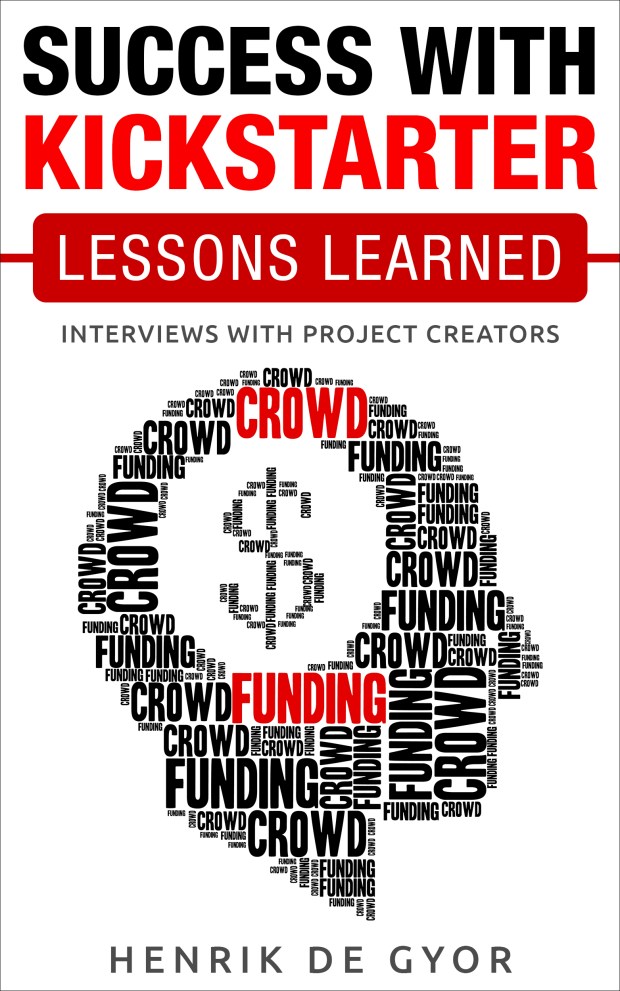
After gathering audience questions, interviewing some other successful Kickstarter creators and compiling thoughts on what it takes to succeed with Kickstarter, I wrote an ebook about it.

I am presenting in person at GW on October 5, 2016, with this new ebook.

I wrote a short ebook about how to do a successful Kickstarter.

Success with Kickstarter: Lessons Learned

Success with Kickstarter: Lessons Learned


Follow this blog if you wish to be notified about the upcoming webinar where I will answer your questions.

Questions?

Running Startup Sprints

Disclosure: Links to other sites may be affiliate links that generate us a small commission at no extra cost to you.

Just to be clear, I don’t run. These Sprints has nothing to do with physically running.

After reading the book called Sprint, this inspired me to try Sprint with a few startups.

Sprint book

As a mentor, I already help a number of startups so as an extension to this, Startups Ignite  organized Sprints for a  few startups with a small team of people with different perspectives to play the different roles the startups did already not have. Startups Ignite supplied the facilitators, myself being one of them.

What is a Sprint?

According to GV, “The sprint is a five-day process for answering critical business questions through design, prototyping, and testing ideas with customers. Developed at GV, it’s a “greatest hits” of business strategy, innovation, behavior science, design thinking, and more—packaged into a battle-tested process that any team can use.”

Running Sprints

This 5 day Sprint process should be a great learning experience for everyone. More Sprints may be scheduled again.

I am running a 5-day startup Sprint (over two weekends 6/3 to 6/5 and 6/11 to 6/12) for 4 startups at a co-working space. Not just myself, of course, but with 20 other engaged individuals.

Learn more about the Sprint process

I encourage anyone interested to read the book/ebook, listen to the audiobook and watch the videos of how to run a Sprint.

Let me know if you are interested in hearing more about it aside from the book.

I will add lessons learned once we have completed the four Sprints.

Questions?