Why not just use KPIs or just keep using roadmaps?
Roadmaps are floating and fluid, but do not necessarily address objectives nor key results aside from what might get done once they start. Aside from feature building, what is the point of all this work? Welcome to the world of OKRs.
I digested the audiobook titled Radical Focus about OKRs which was a great 3.5 hour primer in the use of them in a startup.
After several months of research in what is missing in the market, how to fill that gap and what was worth doing a deep dive to find out a lot more about it, I found the topic for my next (7th) book as well as my next (6th) upcoming podcast series. It is little talked about, vital to most businesses, ignored by some, misunderstood by more and unknown to many.
During my months of research on the topic, I found the origins of it, found people all over the world willing to share information and their experiences with it.
This is something you should be very aware of whether you work for a business which:
offers products or services
is non-tech or tech-focused
has between 1 to 200,000 employees
operates locally, nationally or internationally
Since I only write and podcast about niche topics, the next niche topic I plan to write about and release my next audio podcast series about how to improve user adoption.
After uncovering a lot of fascinating stories about both internal and external user adoption, I want to share these with you every week starting in September. Subscribe today to follow this weekly podcast series about user adoption at useradoptionpodcast.com.
I am giving some live presentations about how to improve user adoption for those who are interested in finding out more and I will take questions. Join me on:
Disclosure: Links to other sites may be affiliate links that generate us a small commission at no extra cost to you.
The past several books I have written have all been on very niche topics that are not visual at all. These are complex, niche topics which many people do not understand and are not familiar household terms nor concepts.
So the challenge is how do I design book covers that are visually simple and eye-catching?
I do not design anything myself. I am not a designer nor do I pretend to be one. That is based on self-awareness, realisation, and acceptance. It would look [bad] like I designed it if I attempted to. I use a designer and/or an illustrator with experience and talent doing this. I use experts when needed and not even try to do everything myself since that is a poor use of my time (see my post on time management)
I instruct the paid resource on the concepts and keywords I am trying to convey with the book. I am a fan of using word clouds. Note that 4 of the 8 books I worked on have word clouds on the cover. I found a great illustrator that makes word clouds formed into recognisable shapes and symbols (scroll below to see sample book covers).
For consistency, I try to use the same resources when possible if these:
Make sense for that project (if determined as a need)
Are available (short-term project need for a few days)
Continue to deliver great work (measured)
Take instruction well (no wasting time re-explaining and re-clarifying)
Deliver within a timely manner (scheduled and timed)
Here are four examples:
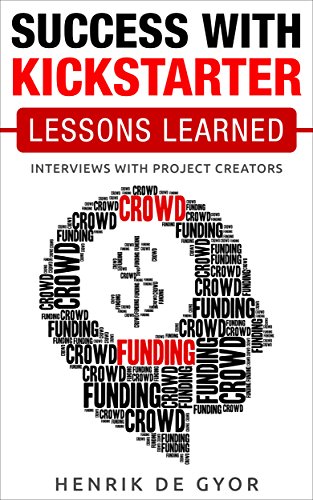
While this project started with a podcast series that later transcribed and funded through a Kickstarter project, the [older] logo for the podcast was incorporated on the cover. The designer added part of a word cloud as the background and rubber stamped “transcribed.” The word cloud seen in the background was used throughout the interior of the book layout thanks to the Designer.
Since I had success with Kickstarter and interviewed several other project creators who had even bigger successes with Kickstarter, I found the artist of this word cloud on a stock photography website under “crowdfunding” which the category of Kickstarter. A similar image was found online had the head facing left, so I contacted this artist via email and asked if he could design it facing right with the direction the text read in English is from left to right. The illustrator created this word cloud of a human head with money in mind.
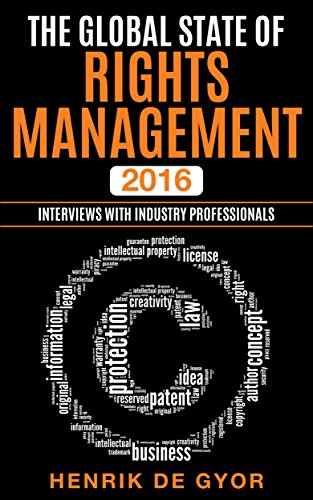
Rights Management is commonly a hard topic to visualise about intellectual property licensing, permissions and copyright. It can be challenging to make visually stimulating. There are very few books on this topic, and covers are often quite dull. This is a bit less dull.
The Blockchain is another topic that is not very visual. Blockchain itself about algorithms, hashes, distributed ledgers, and policies, but I discuss the practice uses of this technology. I commissioned the same artist that created the cover for Success with Kickstarter to create a new image with using a bitcoin logo that was overused in this field and not the basis for this book.
My co-author wanted something was emotionally charging. I wanted something clean, simple and eye-catching.We definitely talk about money as the subtitle says. However, this book unpacks blockchain well beyond the simple model of using it as a cryptocurrency and reviews the other cases of how it can radically change the world as we know it. This is why the visual reference on the cover is reduced to just two characters: >$
I will let you think about these two symbols together so you can find out more in the book in case you want your mind blown. Greater than dollars. Beyond money. My co-author came up with the title and was focused on the money generated around Blockchain. I was interested in the billions of people Blockchain technology could effect.
Relevant keywords were supplied to the Illustrator to incorporate into this word cloud, which he scaled to size to form these two characters.
The last three books listed above were all created were launched within 4 months of each other, but took at least 6 months each to create plus months of research before starting each book project. If you are interested in hearing how I did it, let me know, and I will blog about it here. I will only blog about it if there is an audience who wants to read about it. Look forward to your comments.
Disclosure: Links to other sites may be affiliate links that generate us a small commission at no extra cost to you.
Time
How many sets of 24 hours do you have each day? One
So why should we use multiple calendars for scheduling all of our events?
Segment your time between work, personal (alone), family and friends with your schedule.
Yes, you can schedule your family and friends unless you find another 24 hour period per day.
Everyone has 24 hours per day, 1440 minutes per day and 168 hours per week.
What do you do with your time?
How do you use each hour of your life? Too many don’t care and waste it.
We are either productive or not.
We move the needle toward accomplishment or not.
We move the needle toward our own fulfillment or not.
I believe if I did not accomplish something every day, the day is wasted and that is hurtful to at least one person. You.
Even if I am sick or on vacation, that is not an excuse.
Track your time
How many calendars and scheduling tools do you use to track your time, all your meetings (personal/professional), all your calls and everything else in your day?
I know too many people who use nothing for their own personal schedule and a work schedule applied by their workplace. That is not time tracking nor time management.
Without time management, we create excuses like “I am so busy” or “I don’t have time”.
The fact is we choose how we spend our time. We choose when we get up and go to bed. We choose when we eat. We even choose when we go to the bathroom.
There is plenty of time management advice about focusing on 1 thing or top 3 things per day.
I take a different approach.
Use one calendar for all of my time. Google Calendar follows me everywhere for all of my time.
Thoughts on Paper
Forget paper calendars. I know too many people who repeatedly lose their little agenda or don’t even travel with it. Which makes it a useless afterthought.
When you need to shift your calendar events because someone reschedules, how do you handle that?
Simply confirm a new date/time and drag the existing event to the new date/time on Google Calendar. Done.
A calendar change takes one finger on your smartphone. Yes, you can play “Calendar Tetris” by moving calendar time blocks as needed.
If the calendar tool we use is inflexible and cannot handle iteration, change the calendar you are using. Do not wait for change to happen to you. Seek it ahead of the change so you understand it better than after it happens to you. No whining. No excuses. Use your time more wisely. We can all make the time we need based on our own priorities. After all, it is your time. All 168 hours every week. How are you using your time?
Want to know how I schedule meetings and save time doing so? Read this.
Disclosure: Links to other sites may be affiliate links that generate us a small commission at no extra cost to you.
Some people I have worked with, as well as friends, are amazed at a number of things I accomplish in short periods of time. They ask how I do it. Time management is the key ingredient. Every task takes time.
Most people have ideas, but few execute these ideas into reality. That is what I specialize in. More on idea validation in a future post. Taking ideas into reality within a reasonable time frame is time management.
Our time is valuable. The money will come and go. Time does not come back into our lifetime. Use it wisely. Don’t waste it.
Everyone has 168 hours in a week. Whether you are homeless or a billionaire, we all share the same time. You chose what you do with every hour. What do you do with your time is a choice. You chose to focus (or not) on something and spend the time to do something (or not).
You choose where you live, where you work, when you eat, when you sleep, even when you go to the bathroom.
Get rid of time wasters
It amazes me how people waste their time…
Stop standing in lines or waiting
Many people know about Amazon Now beyond books, but now you can order things online, including coffee before getting to the cafe, have groceries delivered and (soon) schedule an Uber to pick you up. There is often a better and faster way to spend more time where you need to spend time instead of wasting it.
I used to spend up to 10% my week researching things like this online and in person.
No excessive entertainment
Everyone has their own priorities. Playing video games to reach a specific goal. Catch up on a specific TV series of TV. Watch hit movies. Doing things that will only slow you down even more and achieve nothing.
List your top 25 goals/priorities. Organize them in priority order.
Stop doing the bottom 20. Cold hard stop. Focus on the top 5 only.
Months later, revisit that list of 25 to see if those other 20 are still important to you. Likely not so much. Refocus as goals/priorities change over time
Use your freedom with purpose
You likely have a lot of freedom in your day to day life. We all have 168 hours every week, not 40. What do you use your freedom for?
What have you achieved with your own freedom? Are these life goals? Checking off bucket list items? Have you improved the world or your world somehow?
Or are you repeating fairly worthless tasks? Being “too busy” is the biggest cop-out robbing yourself of your own time, your own mindset and your own freedom to accomplish, to fulfill and to satisfy what matters to you.
Stop being a sheep
Paraphrasing Thomas Paine, “You can lead, follow or get out of the way”.
You can follow someone else’s dream (like most people) or you can work on your own dream. Pick one.
Lead, don’t follow. Stop worrying about what others think about you or what other people say about what your doing. Other people’s opinions are their own.
Don’t follow the crowds. The other path will be less crowded for a reason.
Follow your goals to your dream, not the paths already taken by others. Your life is not paint by numbers.
“When you’re 18, you worry about what everybody is thinking of you.
When you’re 40, you don’t give a damn what anybody thinks of you
When you’re 60, you realize nobody’s been thinking about you at all.”
Now imagine living your life from age 18 knowing and believing this. What is possible now? Now that you know this start now regardless of your age.
80/20 Principle
Realize what you are in control of
You do not control everything. Realize what you have control over and what you don’t control.
Don’t waste time with what you have no control over unless you can influence those that can make a difference directly.
Do not participate in any drama. It improves nor solves nothing.
If you have to face drama, walk through any drama through all scenarios to their end states. As you envision them, you will see how pointless and baseless most of these are.
There is always what you’re in control of. If some dies, there is nothing you can do except bury them. If you get fired or laid off from your job, you can focus your energy on finding another position.
Prioritize your intentions with focused action.
Is that higher risk? Sure. You might fail a few times, and in the process, you will learn a lot more as well.
Is it more lonely? Yes, that can be part of the point. Less noise. Less distraction if you are self-aware of the distractions around you. Limit the distractions. Have you read Indistractable?
We can learn more from our failures and learn even more overcoming our challenges.
We do not learn as much from our successes, regardless of the number.
Segment your time
Themed days works for you some people like having Meeting Mondays.
Some have a morning routine or a daily routine, possibly for your own betterment.
Are you a giver, matcher or taker?
Have you read Give and Take? Most people are matchers. Yes, Quid Pro Quo. Some greedy people are simply takers who ask for a lot and give nothing back.
A few people are givers. I am a giver… of my time. Because most people don’t do this and are often matchers, they want to match what I do for them in return, but don’t understand how they could possibly match the value I provide them. This blows their mind because they encounter it so rarely. Matchers wait for an ask or sales pitch from a giver (that does not come). Takers mistaken being a giver as a weakness they can exploit, so takers attempt to take advantage of the giver. However, takers find out later being a giver is a strength that they do not have, takers fail to see the long term purpose of the givers actions and it usually blows up in the face of the greedy taker. There are rarely any short term gains, except for the giver.
Get someone else to do tasks for you 24/7/365
Most of us sleep. Why not have tasks done that are non-critical, (not business drivers, but support tasks) while we sleep or anytime for that matter. Use time zones to your advantage.
You could mow a lawn if you have a lawn or you can pay someone to do it faster and better. Time gained, even if the time is to rest longer/more.
This is why I send audio podcasts to be edited to Upwork at night before I go to sleep and review them by breakfast time. I pay a small fee for this. Well worth it.
This is why I send approved audio to be transcribed into text to Rev within 24 hours for a small fee. Not worth my time to try and transcribe it myself. Someone can do this far better than me. Be self-aware of tasks you do yourself and ask yourself why do you do it yourself. Why not delegate someone else to accomplish it and maybe even do it better. That’s ok too.
I leverage global crowdsourced work forces to do task that can do it better, faster and cheaper than I could ever want to do it. It makes little difference where the work is being done as long as it is being done well enough to save you the time and effort of doing it yourself.
Humans vs. machines saving you time
Many of us are using more artificial intelligence (AI) to augment or simply do our tasks for us. Eventually, these will be good enough to do the tasks for us. These are tasks we don’t need humans to be doing so we could focus on more important things. The tipping point for AI to be ubiquitous is not there yet due to quality concerns and luddites. As I interviewed people on Tagging.tech, many of the AI technologies are focusing on user experience and speed. Since we have no patience, speed for the results are important. However, the accuracy of results still matter, even though humans are not getting any more accurate. Some AI experts claim another 10 to 15 years of development before these can be that good.
Then, what are we going to do with our time? Imagine not being burdened with tasks you don’t want to do and imagine what you could accomplish with that freedom.



 Henrik de Gyor